Market Position Analysis
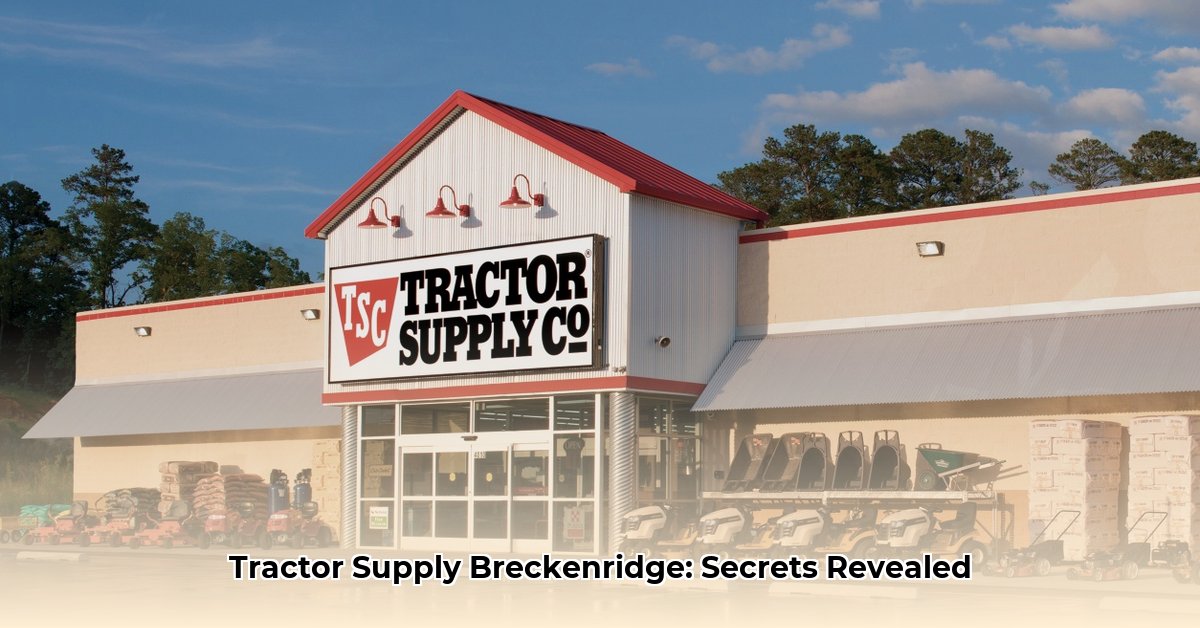
Tractor Supply Company (TSC) has established a strong presence in rural retail, and its Breckenridge location serves as a compelling case study. This analysis examines TSC's market dominance, competitive landscape, and future growth potential.
Market Dominance: A Rural Retail Leader
TSC's Breckenridge store enjoys a significant market position, likely due to its strategic location and limited direct competition from similarly large-scale retailers. While precise market share data requires further research, anecdotal evidence suggests TSC holds a substantial portion of the local rural retail market. A comparative analysis against competitors like Rural King or Farm & Fleet (where present) would provide a clearer quantitative understanding of TSC's dominance. A geographical map visualizing store density across the Breckenridge area would further illustrate TSC's reach and identify potential areas for expansion or competitive vulnerability.
Product Diversification: Resilience Against Market Fluctuations
TSC's success stems partly from its diverse product offerings. Beyond traditional farm supplies, they offer a wide range of goods, including home improvement items, clothing, and seasonal products. This diversified portfolio insulates TSC from market volatility. A downturn in one product category can be offset by growth in another, creating a more resilient business model compared to retailers with narrower product focuses. This diversification is critical in managing economic downturns.
Competitive Landscape: Identifying and Analyzing Rivals
A comprehensive competitive analysis is crucial. Direct competitors in the Breckenridge area require identification. This includes not only large-scale retailers like Rural King or Farm & Fleet (if applicable), but also smaller, independent farm supply stores and even online retailers offering comparable products. Comparing these competitors across pricing strategies, product variety, customer service, and overall brand perception will reveal TSC's competitive advantages and potential weaknesses. Understanding competitor strategies is key to maintaining a strong market position.
Customer Service and Brand Loyalty: The Importance of Personal Connection
TSC's reputation for knowledgeable and friendly staff significantly contributes to its success, particularly in smaller communities where personal relationships matter. Positive customer experiences foster brand loyalty and generate repeat business. This aspect of TSC’s strategy requires thorough investigation, potentially including customer feedback surveys or interviews, to fully understand its contribution to the overall business performance. How does positive customer service translate into longer-term customer retention and increased revenue?
Supply Chain and Risk Management: Navigating Volatility
TSC’s extensive product range necessitates a complex supply chain, susceptible to various disruptions. Fluctuations in fuel prices, raw material shortages, and unpredictable weather patterns represent significant risks. To mitigate these, TSC employs various strategies such as diversifying suppliers, optimizing logistics, and proactively adapting to changing market conditions. Further investigation into specific supply chain risk mitigation strategies would paint a more complete picture of TSC’s resiliency. How are they mitigating specific risks, such as fuel price increases or disruptions in import/export?
Sustainability: A Path to Future Growth
While detailed information on TSC's sustainability initiatives is limited, incorporating environmentally friendly practices is becoming increasingly vital for long-term success. Consumers and investors are increasingly prioritizing sustainable business practices. Focusing on sustainable sourcing, waste reduction, and environmentally friendly operations could enhance TSC's brand image, attract new customers, and boost investor confidence.
Future Growth Potential: Short-Term and Long-Term Strategies
Short-Term Growth (0-1 Year)
Prioritizing improvements to TSC's online presence is critical for enhancing customer reach and improving inventory management. Investments in employee training will ensure that their reputation for expert customer service is maintained, driving further loyalty and sales. These actions would likely lead to noticeable improvements in revenue within a year.
Long-Term Growth (3-5 Years and beyond)
Long-term growth depends heavily on expanding supply chain diversification, focusing on sustainable sourcing options, and potentially entering related markets through strategic acquisitions of smaller businesses. Investing in technological improvements throughout the supply chain would also enhance efficiency. Implementing and developing more extensive sustainability initiatives should be a priority. This will lead to a stronger brand and higher investor confidence.
Conclusion: Breckenridge and Beyond
Tractor Supply Company's success in Breckenridge exemplifies its broader strategy for dominating the rural retail market. While its current market position is strong, TSC faces ongoing challenges including supply chain volatility and the increasing importance of sustainability. By focusing on short-term improvements in its online presence and employee training and pursuing long-term strategies such as enhanced sustainability and strategic acquisitions, TSC is well-positioned to maintain its leading role in rural retail. The Breckenridge store's success offers a valuable template for continued growth and adaptation within the changing rural landscape, highlighting the importance of customer satisfaction, product diversity, and a proactive approach to supply chain management and sustainability.
Sources and Methodology
This analysis is based on publicly available information and utilizes the Breckenridge Tractor Supply location as a case study to extrapolate broader industry trends. Further research, including detailed competitive analyses, customer surveys, and financial reports, would provide a more comprehensive understanding of TSC's business operations and future prospects.